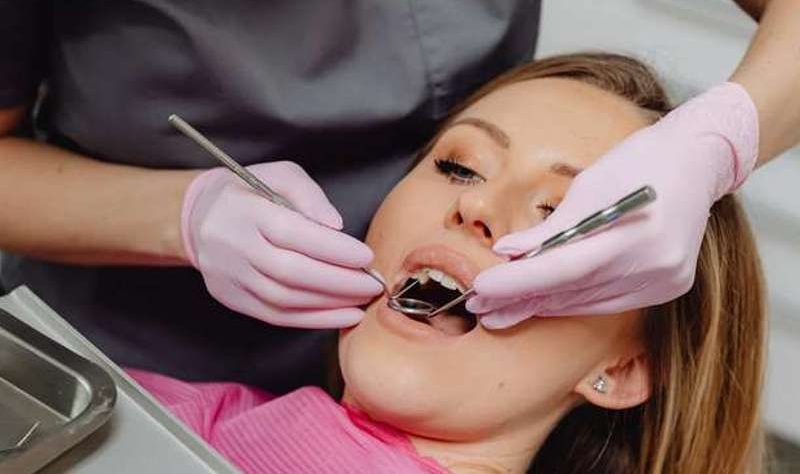
Nobody walks into the dentist’s office thinking, “Gosh, I hope today’s all about tooth scales.” But maybe they should. That small instrument—sitting at home in a jewelry heist kit or a Renaissance torture chamber—is the secret star of every successful cleaning. As patients grip the chair arms and steel themselves for the inevitable tide of remorse, the hygienist is smiling inwardly, aware that the scales are going to do their brilliant work.
No, it’s not an app to measure tooth weight. These scales are those precise, pointy instruments designed to scrape, wiggle, and liberate your molars from the tyranny of plaque and tartar. Glamorous? Not exactly. But essential? Absolutely.
Table of Contents:
The Soundtrack of Clean Teeth
There’s a really specific sound that scales make when they’re busy working—like a squeaky, metallic chatter that declares directly to your soul: You should floss more. But there’s also something strangely satisfying about it, like a deep-clean for your mouth. The tool might be small, but its power is large. It’s like the toothbrush’s overachieving cousin who manages to graduate college and become something of itself.
Tooth scales are caused by the precipitation of minerals from saliva and gingival crevicular fluid (GCF) in plaque on the teeth. This process of precipitation kills the bacterial cells within dental plaque; however, the rough and hardened surface that forms provides an ideal surface for further plaque formation.
Samantha, a dental hygienist with a wicked humor and a drawer full of odd stickers for courageous patients, calls them “plaque jackhammers.” She’s only half serious. When she picks up her tooth scales, she’s like a sculptor approaching a block of stone. Only this stone is covered in coffee stains and regret.
The Tartar Terminator
The scales are the Arnold Schwarzenegger of the dental tool world. They don’t negotiate. They don’t whisper. They just show up, get under the gumline, and annihilate tartar like it owes them money. It’s oddly empowering to know that something so small can dismantle a year’s worth of pizza cheese residue and cold brew buildup in one swift flick.
Sometimes patients ask, “Can’t we just skip the scaling part?” That’s like asking if you can bake a cake without flour. You could try, but it’s going to get weird fast. Tooth scales aren’t optional. They’re the gatekeepers to oral health nirvana—removing hardened gunk that brushing alone can’t touch.
A Tool With a Talent for Drama
The tension becomes dramatic when the hygienist remarks, “You may feel a little pressure.” That’s slang for: “Get ready to rethink your entire relationship with dental hygiene.” And yet, there’s a sort of poetic justice in it. It is the same instrument that sends shivers down your spine that makes your teeth feel as smooth as polished marble.
Poor oral hygiene leads to gum disease, leading to bone loss, and eventually tooth loss. Deep Scaling is recommended to remove tartar deposits from tooth surfaces for better oral health.
Even dentists can’t help but admire the artistry. One remarked, “There’s nothing quite like the satisfying click of the scales hitting calculus. It’s like music to my ears.” That might sound a little dark, but in the realm of dental professionals, it’s practically Shakespearean.
Tooth Scales: The Unsung Heroes of Hygiene
In a world of ultrasonic gadgets and laser-whatever, tooth scales remain gloriously analog. No batteries, no Bluetooth, just raw, metallic determination. They’ve been around for ages—and for good reason. They work.
So the next time you find yourself reclined in that chair, mouth open wide, fighting not to gag on your own tongue, take a moment to consider the unsung hero in the hygienist’s gloved hand. Tooth scales might not play center stage, but they most definitely have the standing ovation coming their way.